
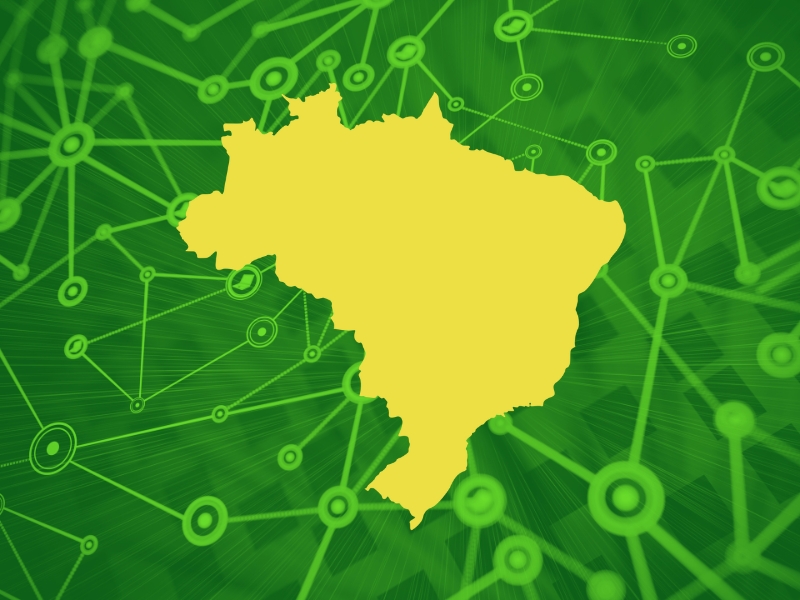
Last month, Brazil pulled off a master move on Latin America’s digital chessboard with ReData.
With its new Special Taxation Regime (ReData), it’s not just offering tax incentives for data centers; it’s implementing the most sophisticated digital industrial policy in the region.
The key question isn’t whether Brazil will win. The real question is whether this move will catalyze an unprecedented regional integration… or, on the contrary, reinforce the historical fragmentation that has held us back.
💡 Salience Consulting has experience: we’ve seen one lesson repeat itself: isolated digital infrastructure operates underutilized; integrated, it generates exponential returns.
So, what makes ReData a true game-changer?
ReData isn’t a blank check. Brazil demands mandatory counterparts:
- ✅Emphasis on renewable energy usage.
- ✅Investment in local digital R&D.
- ✅Reservation of capacity for the domestic market.
Brazil isn’t just attracting investment: it’s building an ecosystem with solid regulatory enforcement. Brazil’s potential is undeniable:
- Energy: 85–89% renewable matrix, with surpluses that data centers can absorb.
- Connectivity: Fortaleza is already the 2nd largest global hub for submarine cables.
- Real demand: 183M internet users, with systems like PIX (87% adoption) and Gov.br (166M digital identities) generating massive and constant transaction volumes.
The dilemma: integration or fragmentation. Latin America has already tried and failed with initiatives like the South American Fiber Optic Ring, due to lack of political coordination and the absence of a neutral technical institution.
What’s changed today?
- ✅Data demand has skyrocketed (+300% since 2015).
- ✅Giants like AWS, Azure, and Google Cloud are already present in the region.
- ✅Regulatory frameworks have matured.
But at the same time:
- ❌Political incentives remain local.
- ❌There’s no regional technical body with mandate and budget, like PIDA in Africa, ASEAN in Asia, or GAIA-X in Europe.
The opportunity: complementary specialization. Imagine a Latin American ecosystem where each country leverages its comparative advantage, instead of competing in a subsidy race:
- Brazil → Intensive processing (AI, 3D rendering) thanks to its energy surplus
- Chile → Edge computing and storage for Asia, leveraging Atacama and Magallanes winds.
- Colombia → Disaster recovery hub and transit to the Caribbean/Central America.
- Mexico → Low-latency services for the U.S. market (nearshoring, gaming).
- Argentina → Human capital for managed services, DevOps, and software.
It’s not theory: Africa reduced bandwidth costs by over 50% by integrating 21 countries with the EASSy cable. ASEAN coordinated 10 different legal systems under the ASEAN Digital Framework. How? With permanent technical institutions, shielded from political cycles.
Brazil has placed the first piece. The question for the rest of Latin America is: Do we play to compete against each other or to win together?
👉 What do you think? Are we on the dawn of an integrated Latin American digital ecosystem… or will we repeat past mistakes?
If you’re exploring opportunities in digital infrastructure, regional interconnection, or industrial policies in Latin America, contact me. At my consultancy, we’ve helped structure similar projects on other continents. Let’s talk about how to boost your strategy!